Wo Es Beginnt (umkleiden)
Where It Begins (to dress)
wood, lockers, plasterboards,
hangers
361 x 315 x 214 cm
2024
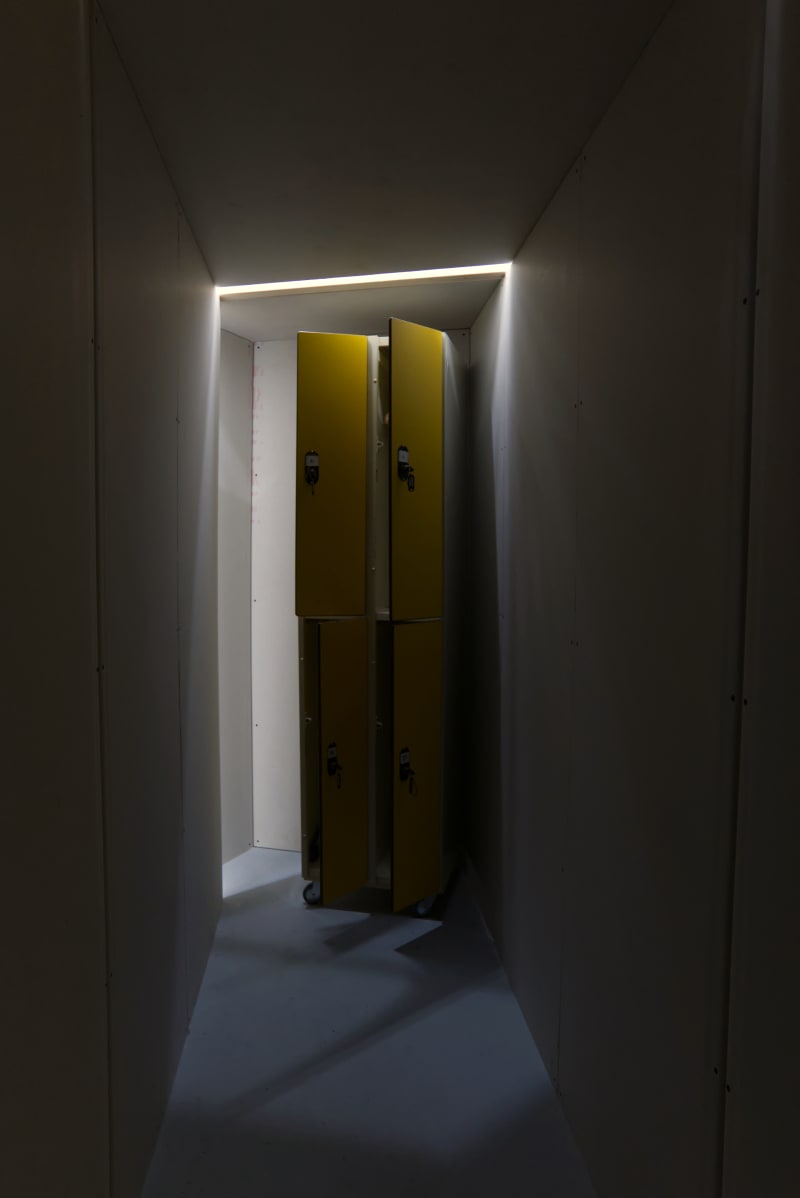
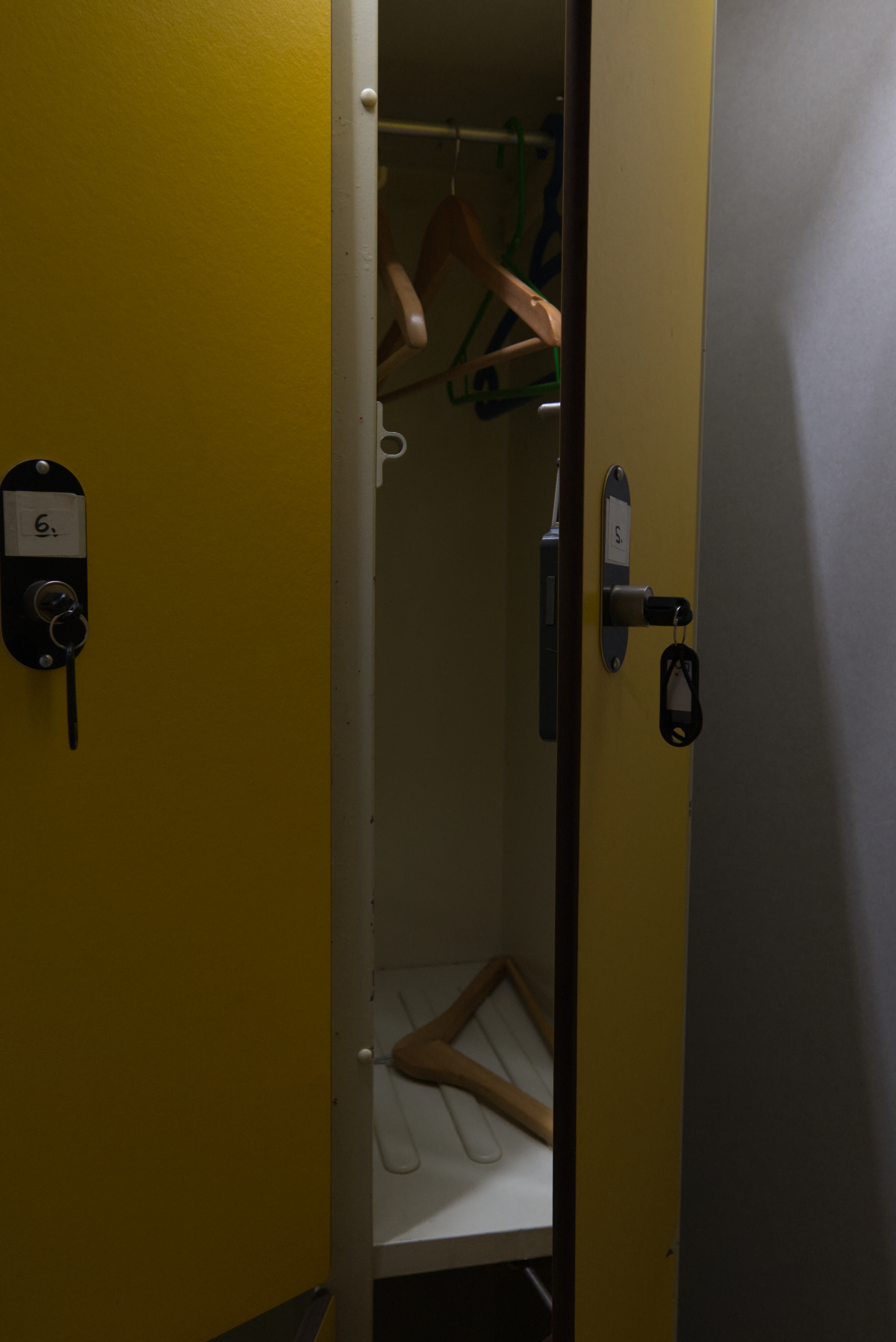
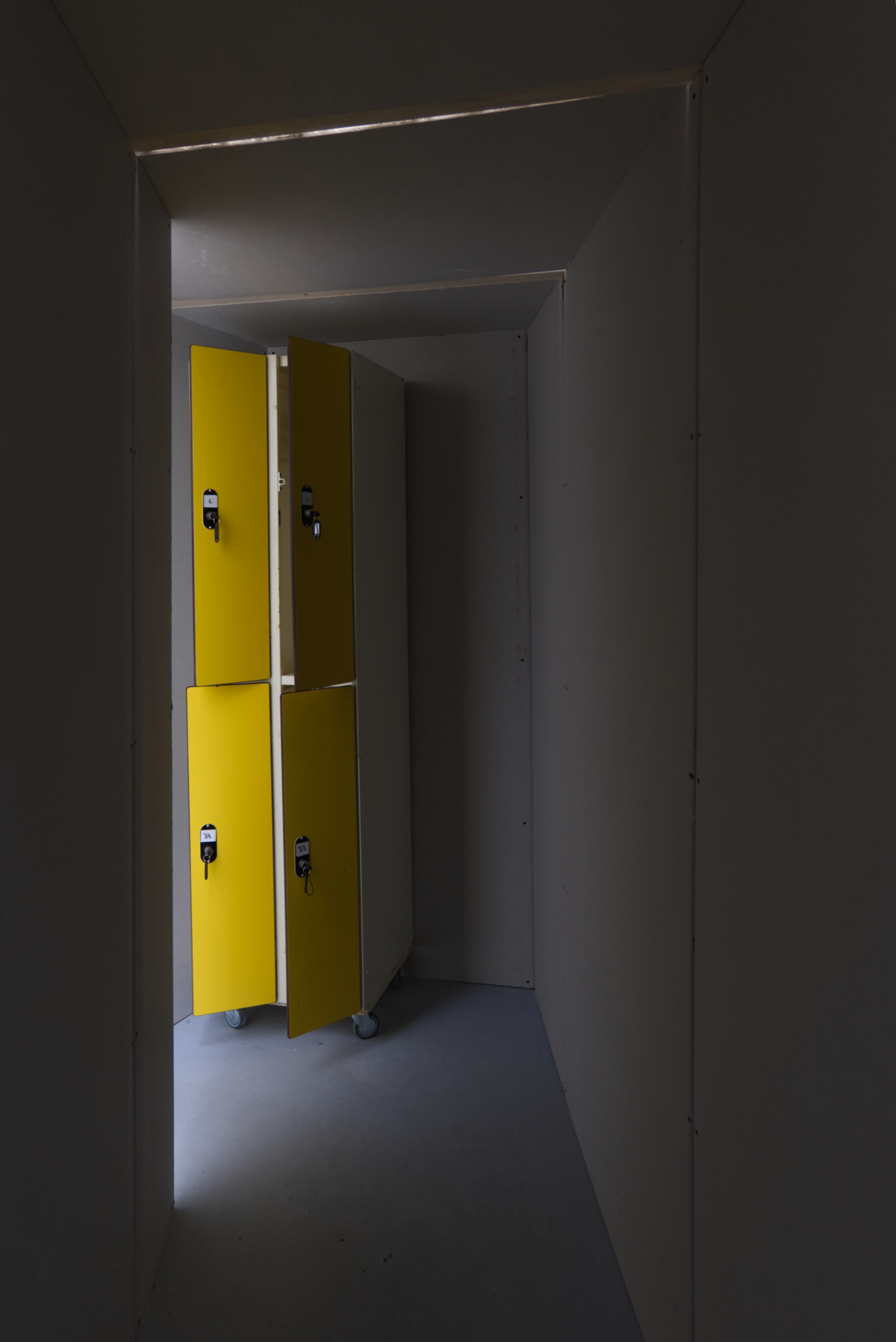
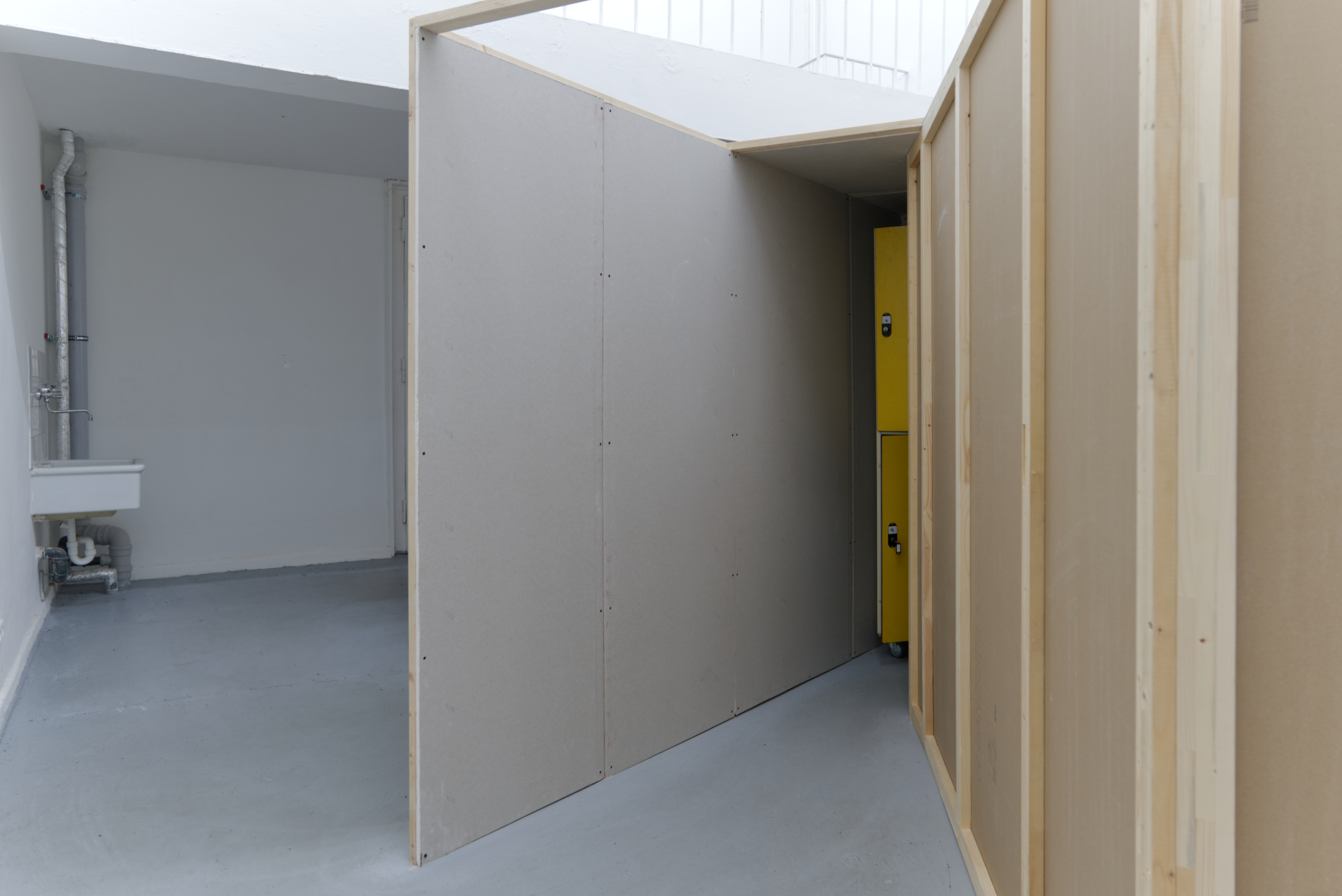
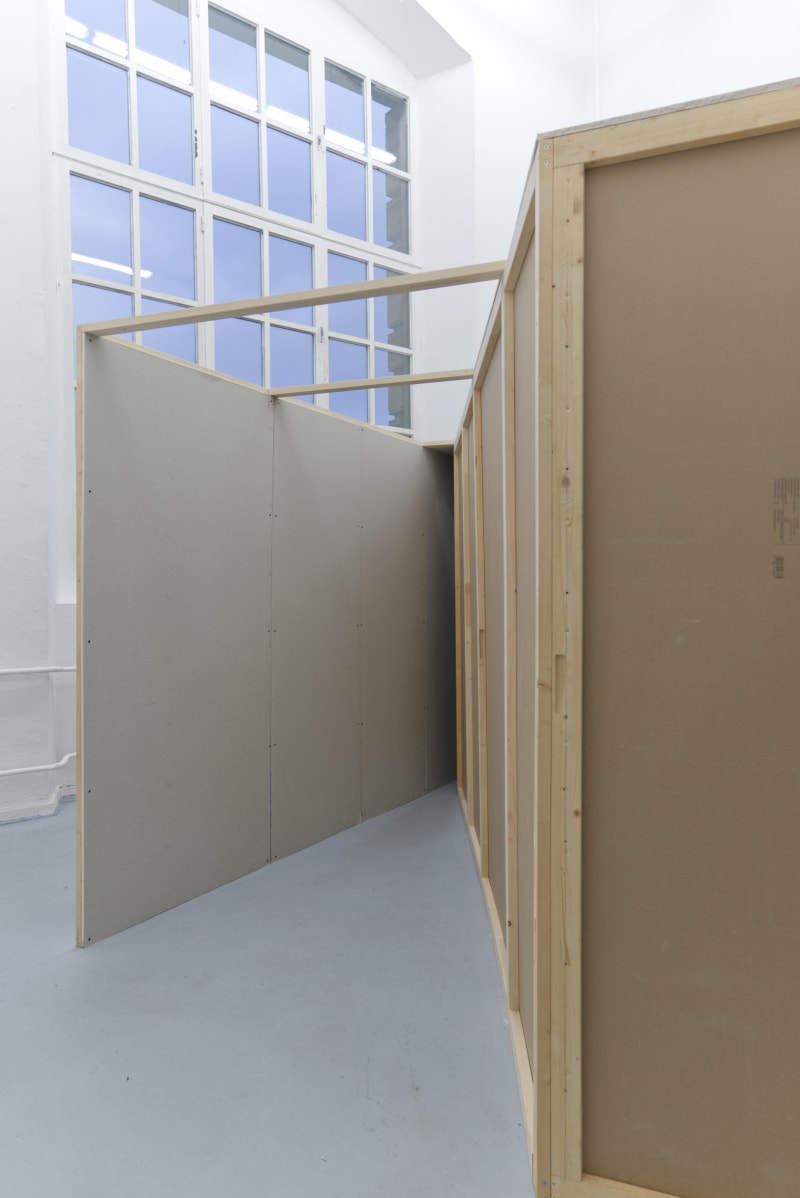
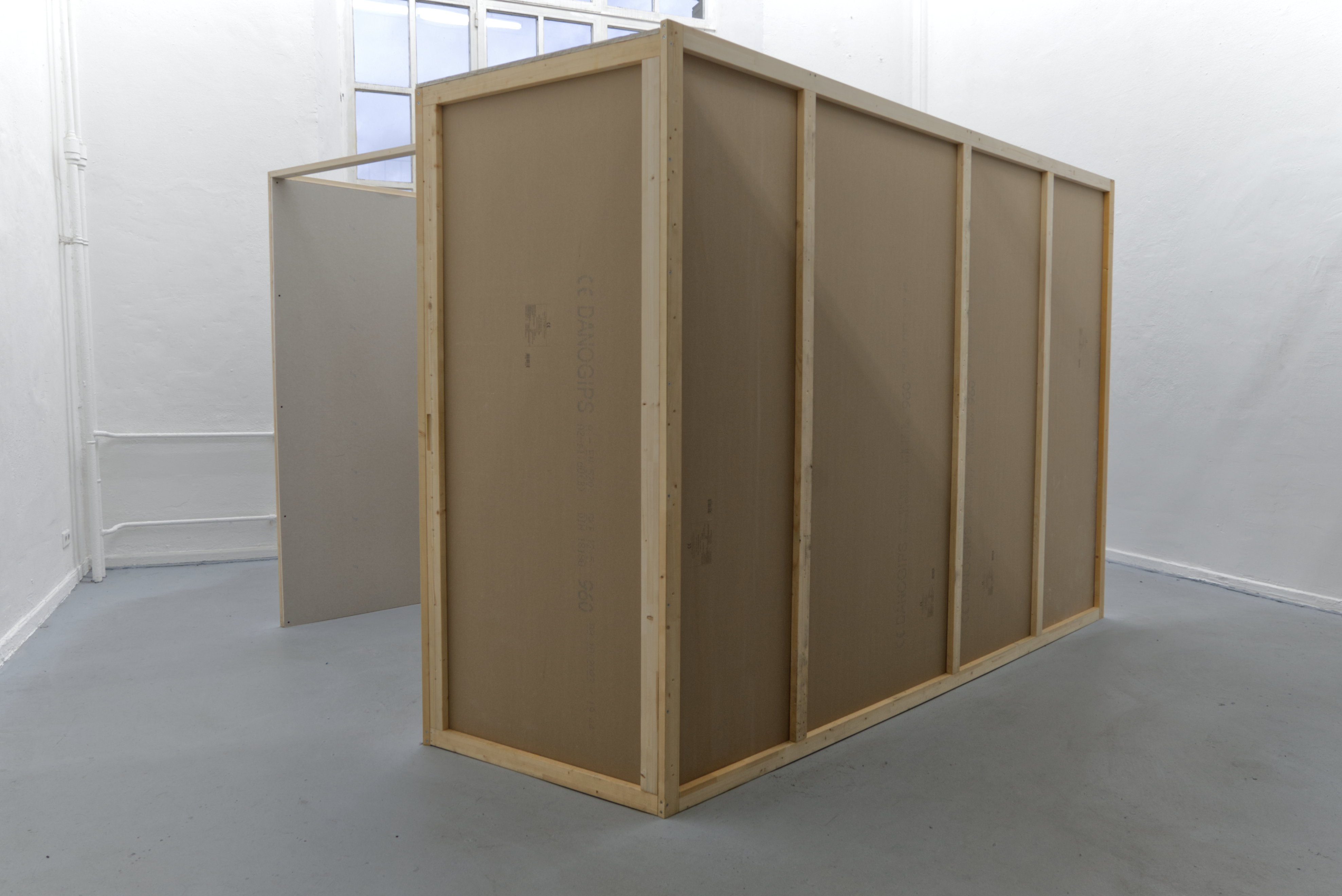
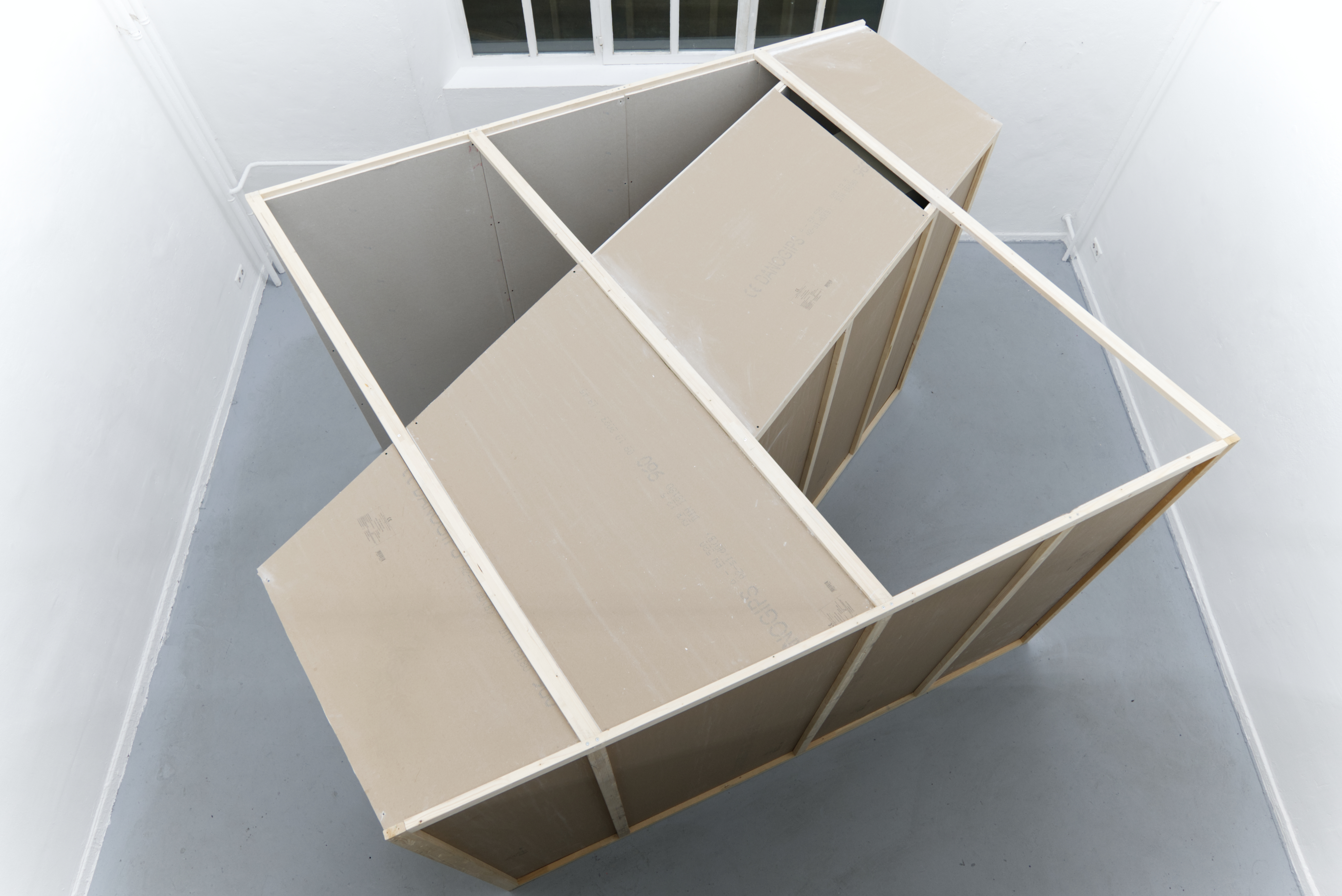
It doesn’t necessarily take much to create a space. This is also demonstrated by Philippe Emanuel Derlien’s Wo Es Beginnt (umkleiden). And this is despite the fact that the installation, with its unadorned plasterboard panels, still appears unfinished and in the very process of coming into being. The rawness of the work leads us to believe we can gain an insight into one or two of the artist’s working and thought processes. At the same time, it brings to mind Brutalist buildings, which today are predominantly associated with exposed concrete that is deliberately left unclad. But can we really speak of architecture here? The installation seems rather to question the principles of modern architecture. The often-stated preference for simple geometric forms and concepts such as ‘form follows function’ suggests the creation of an organic and functional environment, which in reality sometimes holds true to a greater extent and sometimes to a lesser extent. Derlien’s supposed architecture, characterised only at first glance by simple geometric forms, initially opens up to the viewer in several places. The artist, however, creates a moment of disorientation by making them accessible only on one side. The slit in the ceiling is equally disorienting, as it contradicts the ceiling’s functional purpose. Yet at this point, we are reminded that an architectural space is more than merely a structure that separates the interior from the exterior. Thus, the slits of light here can be read as a reference to Le Corbusier, in whose religious buildings they appear precisely in the most unexpected places, sometimes diffusely, sometimes very directly, not merely emphasising the (spiritual) atmosphere and liturgical proceedings, but deliberately frame them. The light staged by Derlien shows us the way into the interior of the installation and sets the mood for what we are about to see: the lockers, some of which are open and appear to have been hastily abandoned, hardly invite us to linger. At the same time, the seemingly surreal atmosphere encourages us to project our own stories that might begin here. In this way, Derlien simultaneously creates a place and a non-place – both in the literal sense, the latter also in accordance with the idea of Marc Augé.
Dana Margarete Adele Bulic