



Epilog
graduation work
Kunstakademie Düsseldorf
wood, plasterboards, wall opening, wax, hdf,
chip board, steel, plaster, cardboard, pencil
2025
Epilog - final presentation, 2025, Kunstakademie Düsseldorf
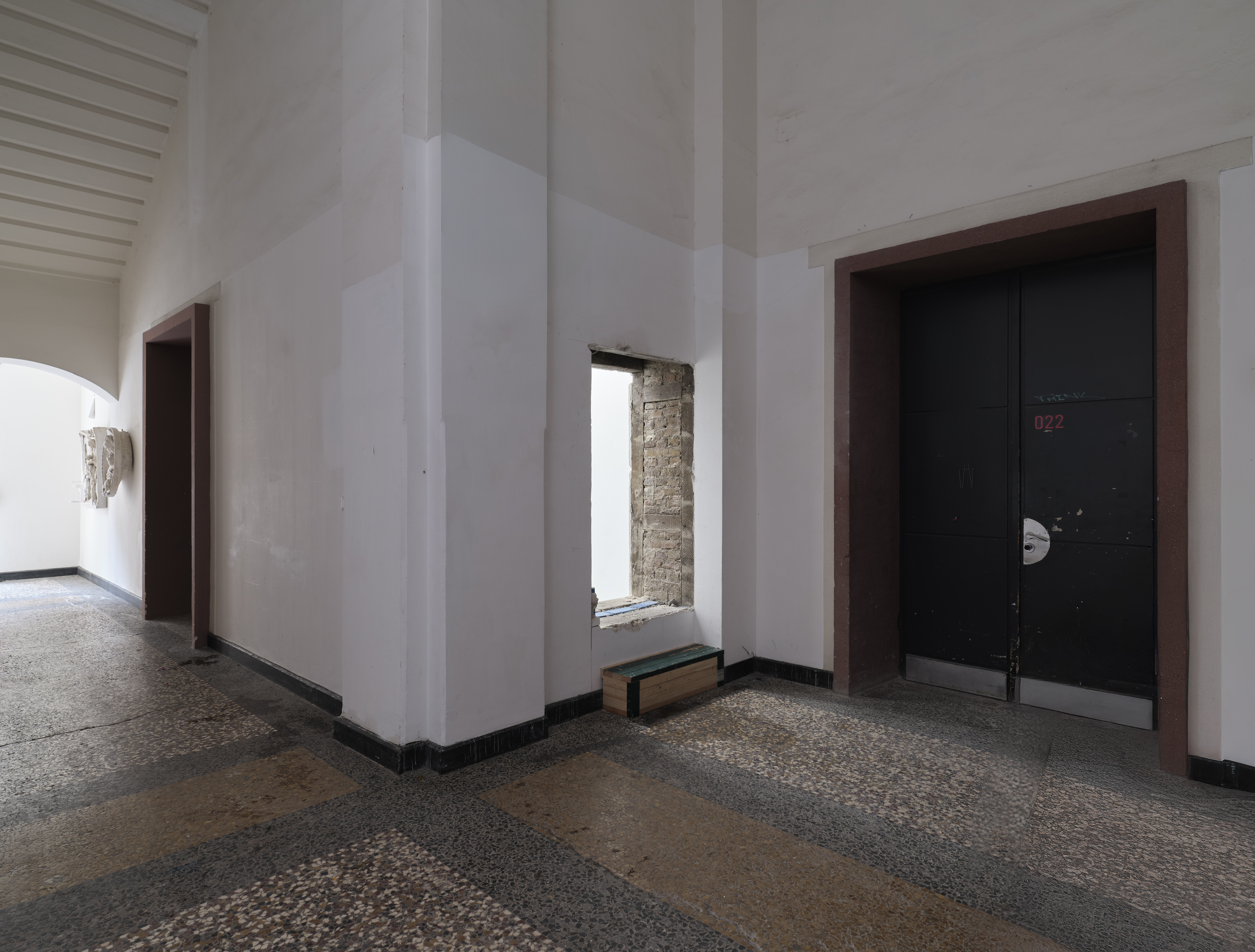
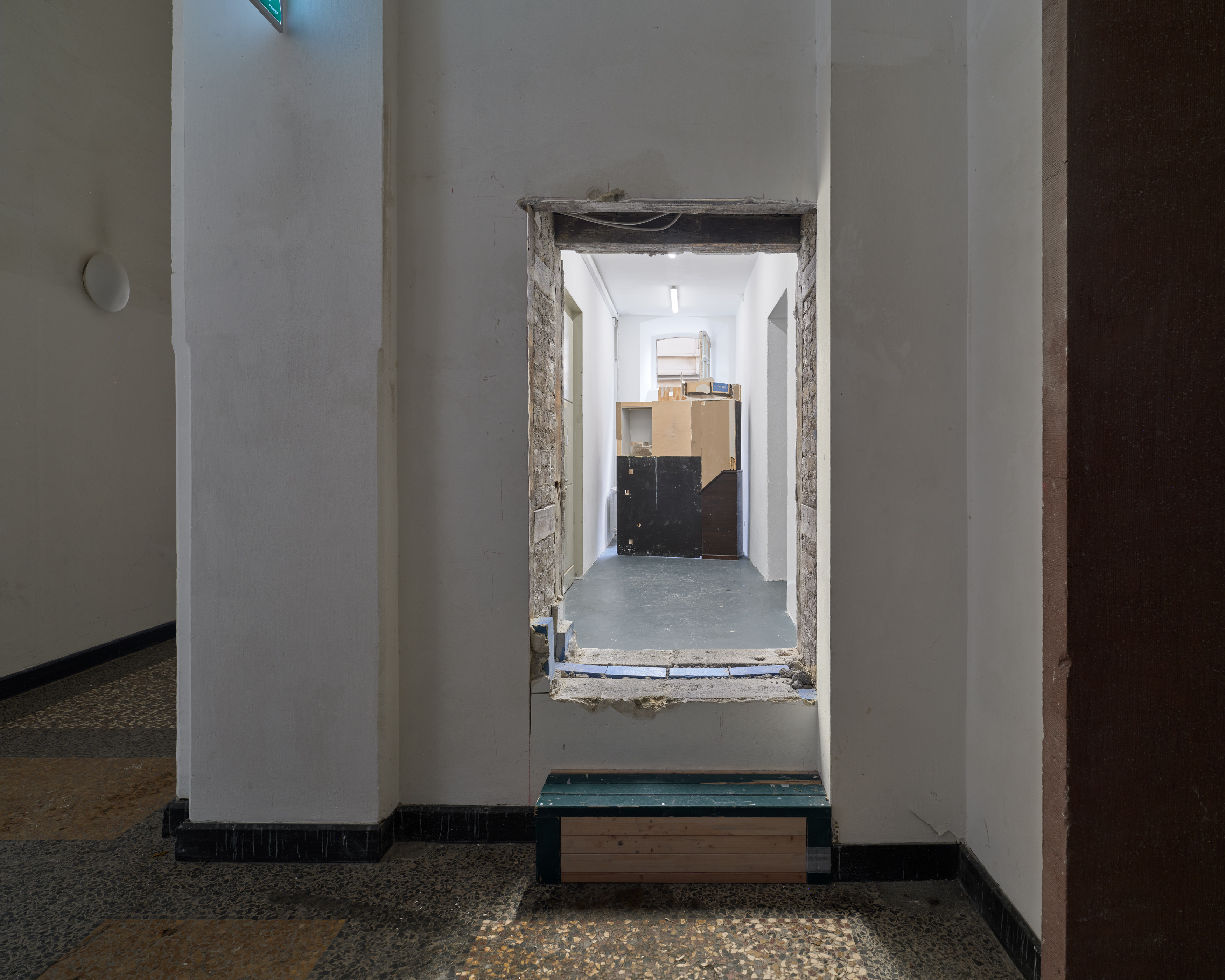
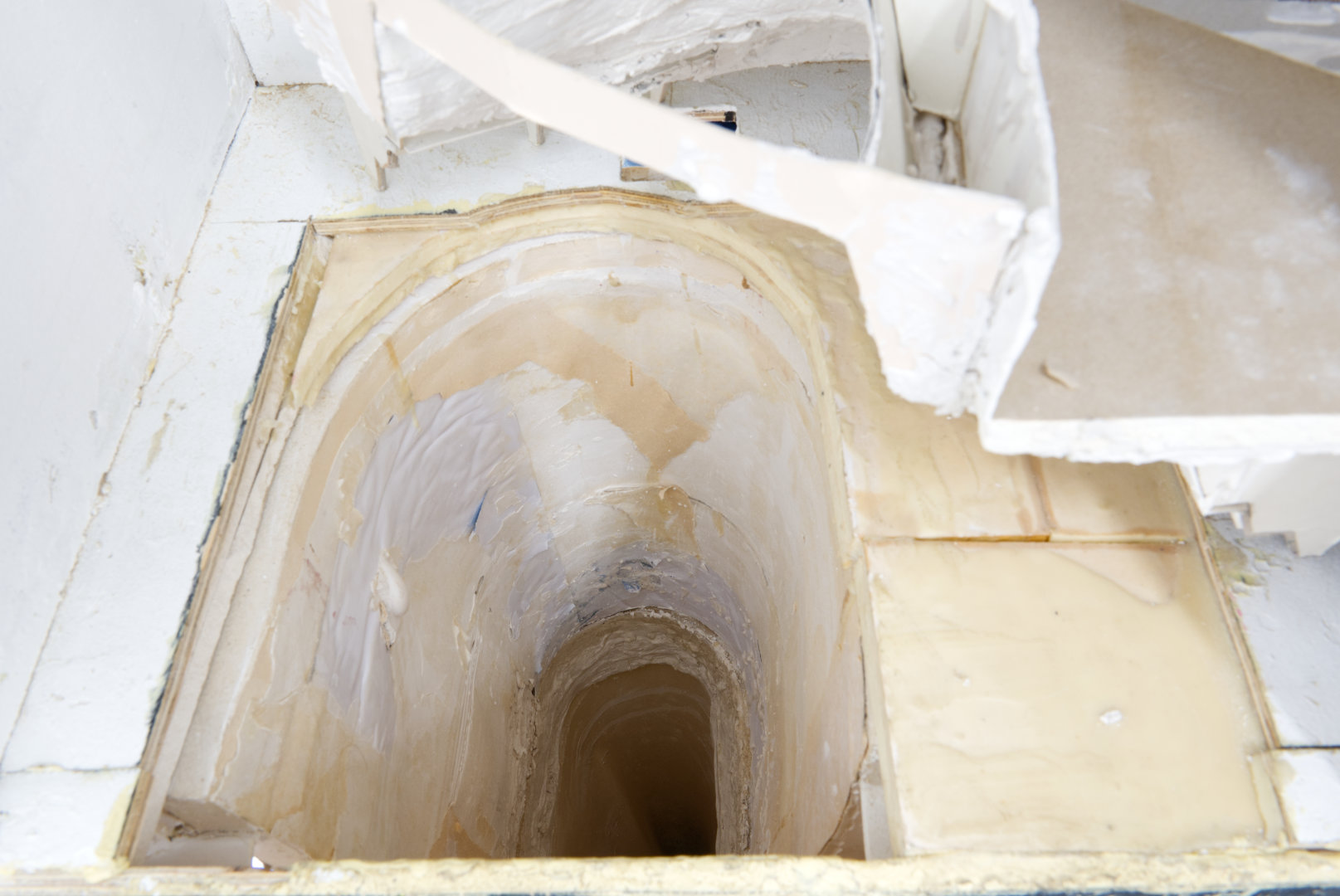
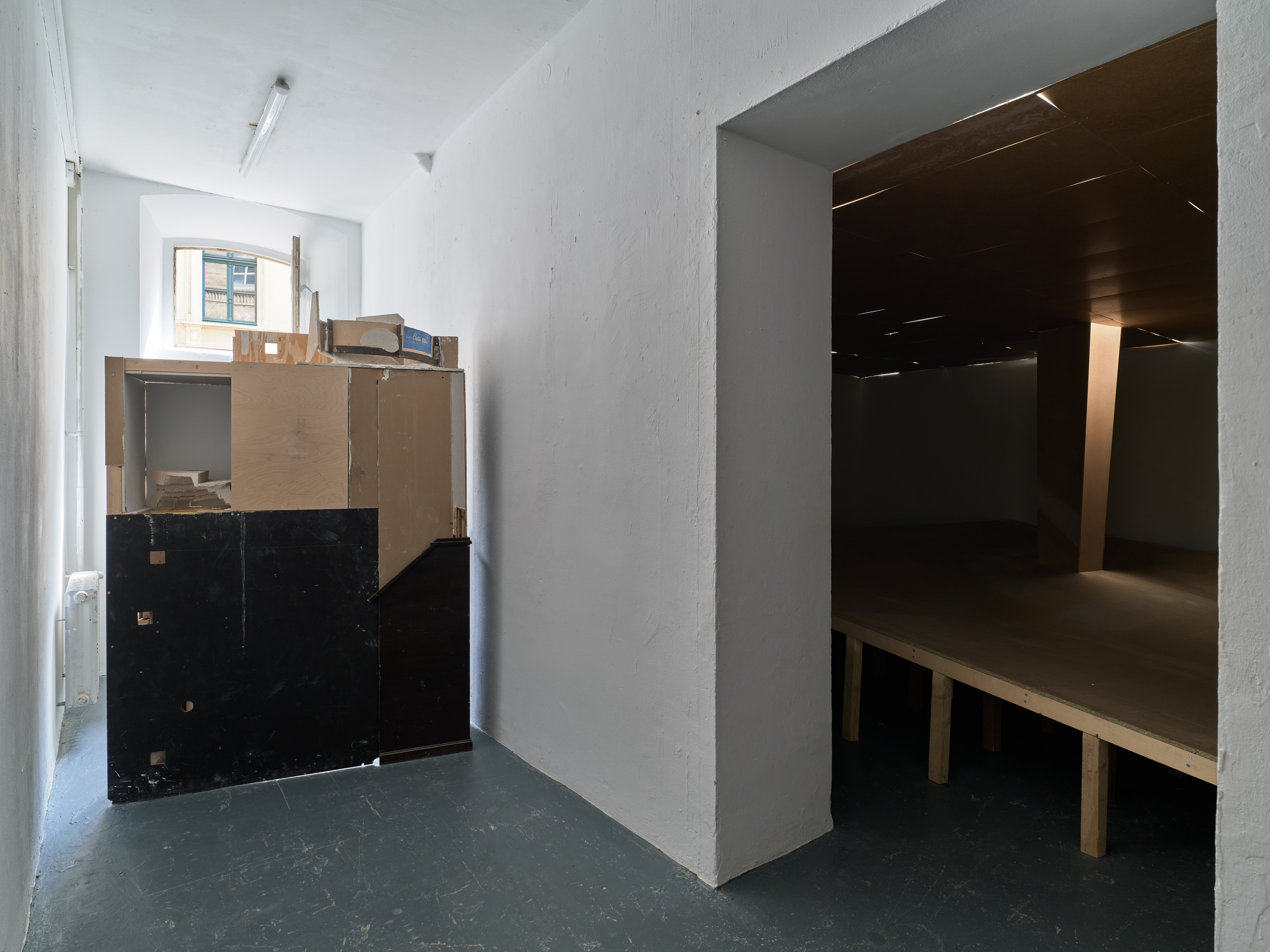
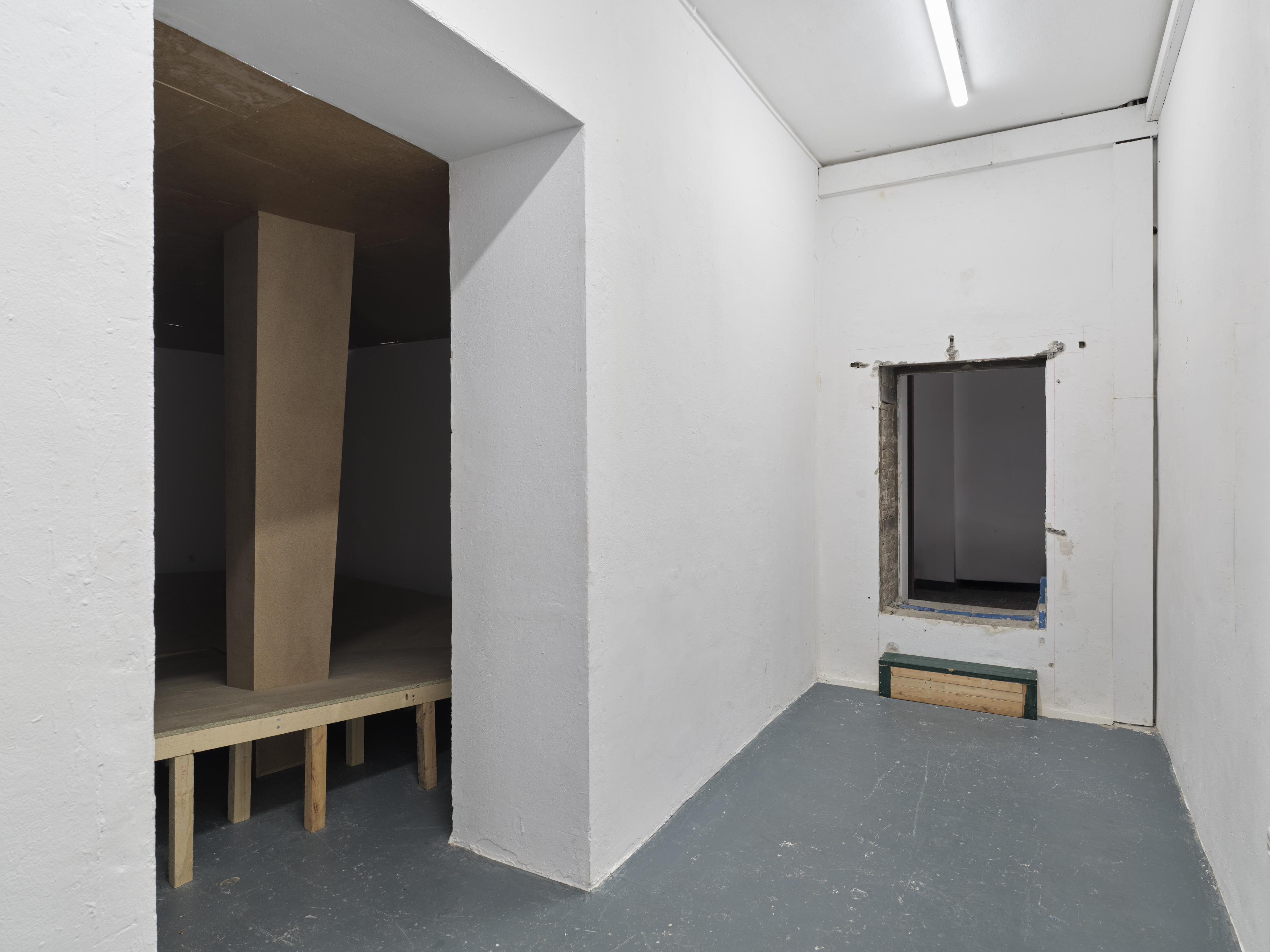
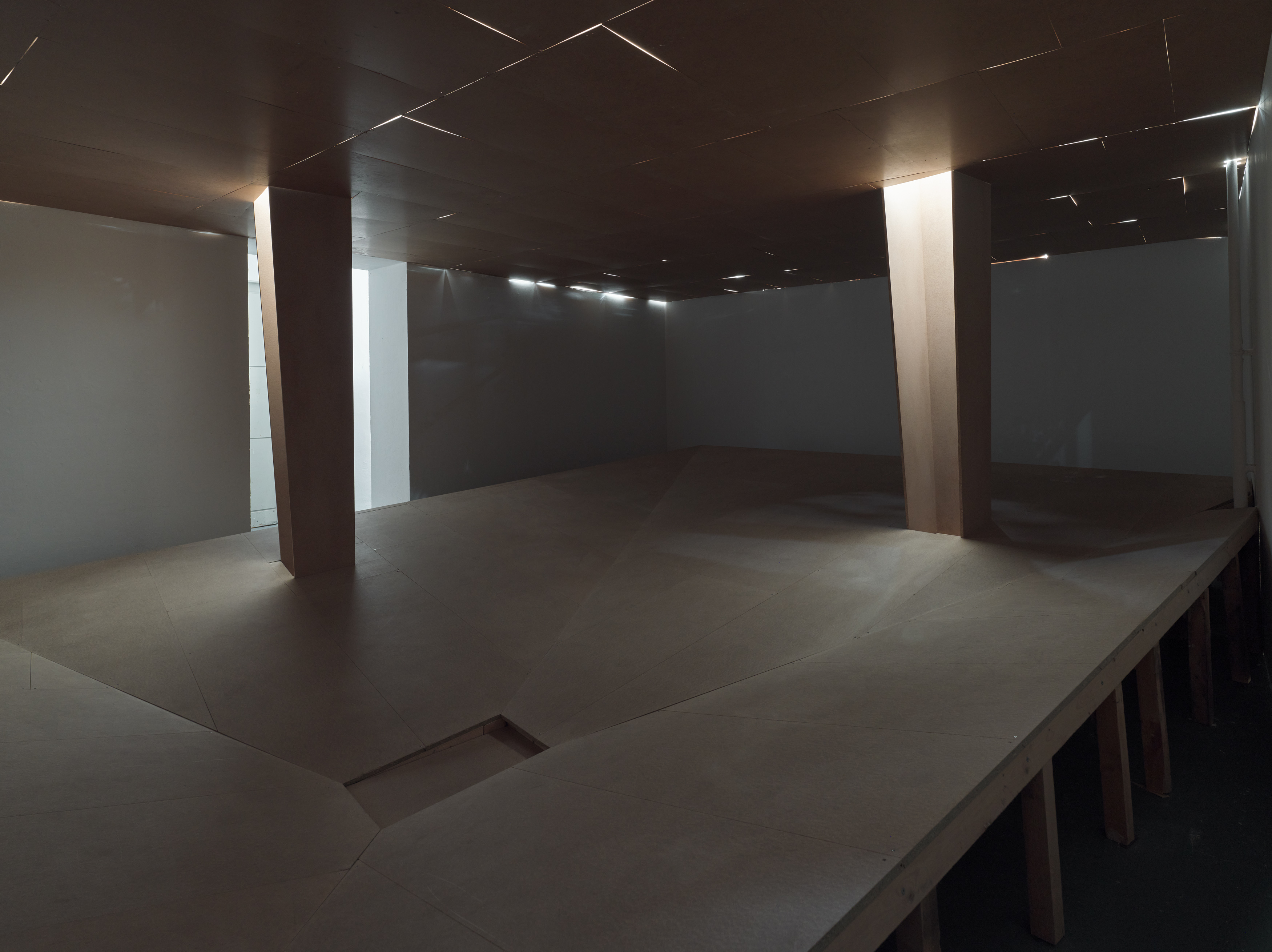
Research using historical floor plans from the Düsseldorf Art Academy archives revealed a significant architectural change to the layout of our classroom in the 1950s: the space had been designed as an apartment, divided into two storeys and featuring a smaller entrance. The entrance to the studio, which had been located elsewhere until 1978, was revealed as a breach in the wall and marks a new beginning for the exhibition. The new (old) entrance not only disrupts established patterns of movement but also challenges the authority of the building and the uses dictated by the institution.
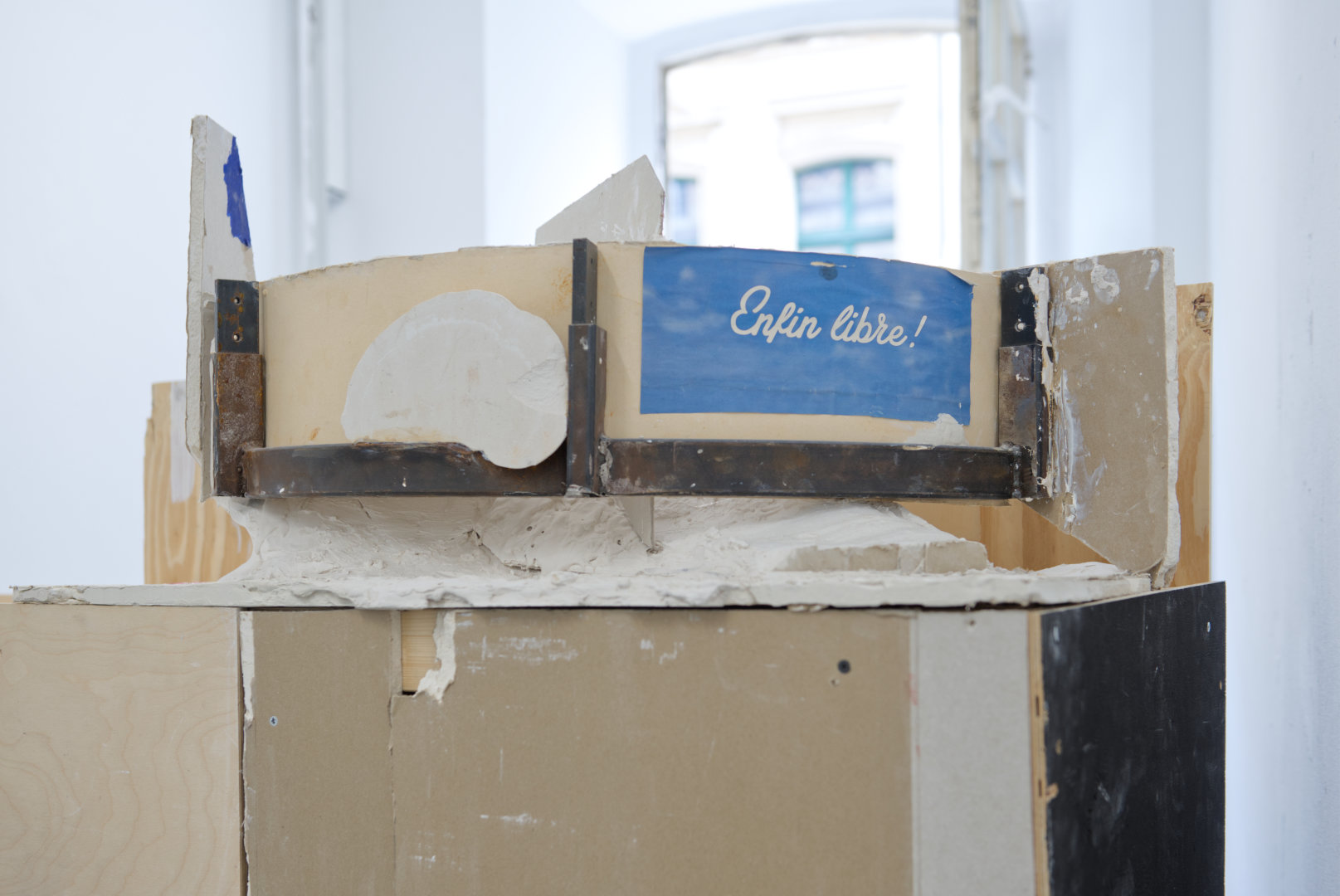
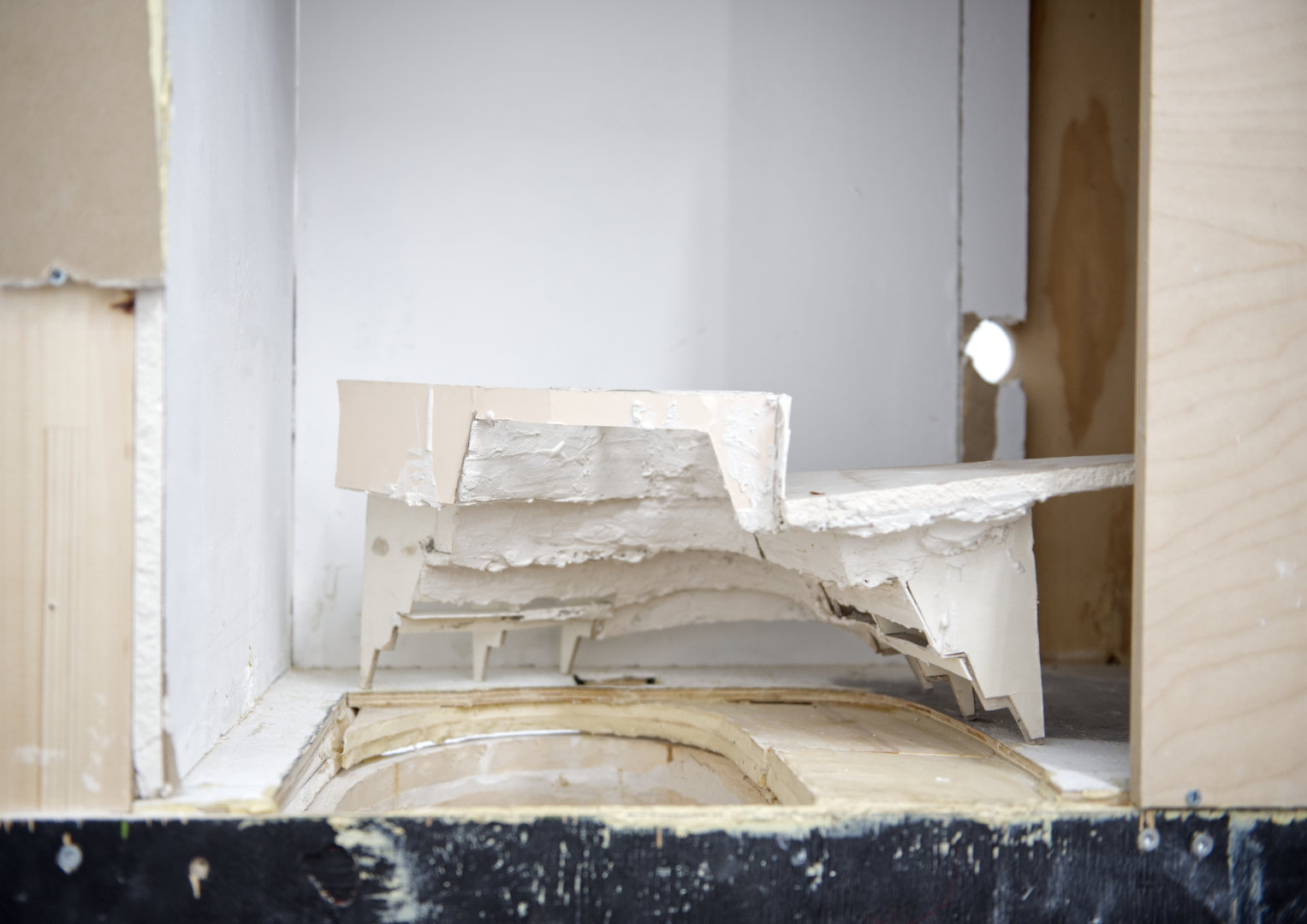
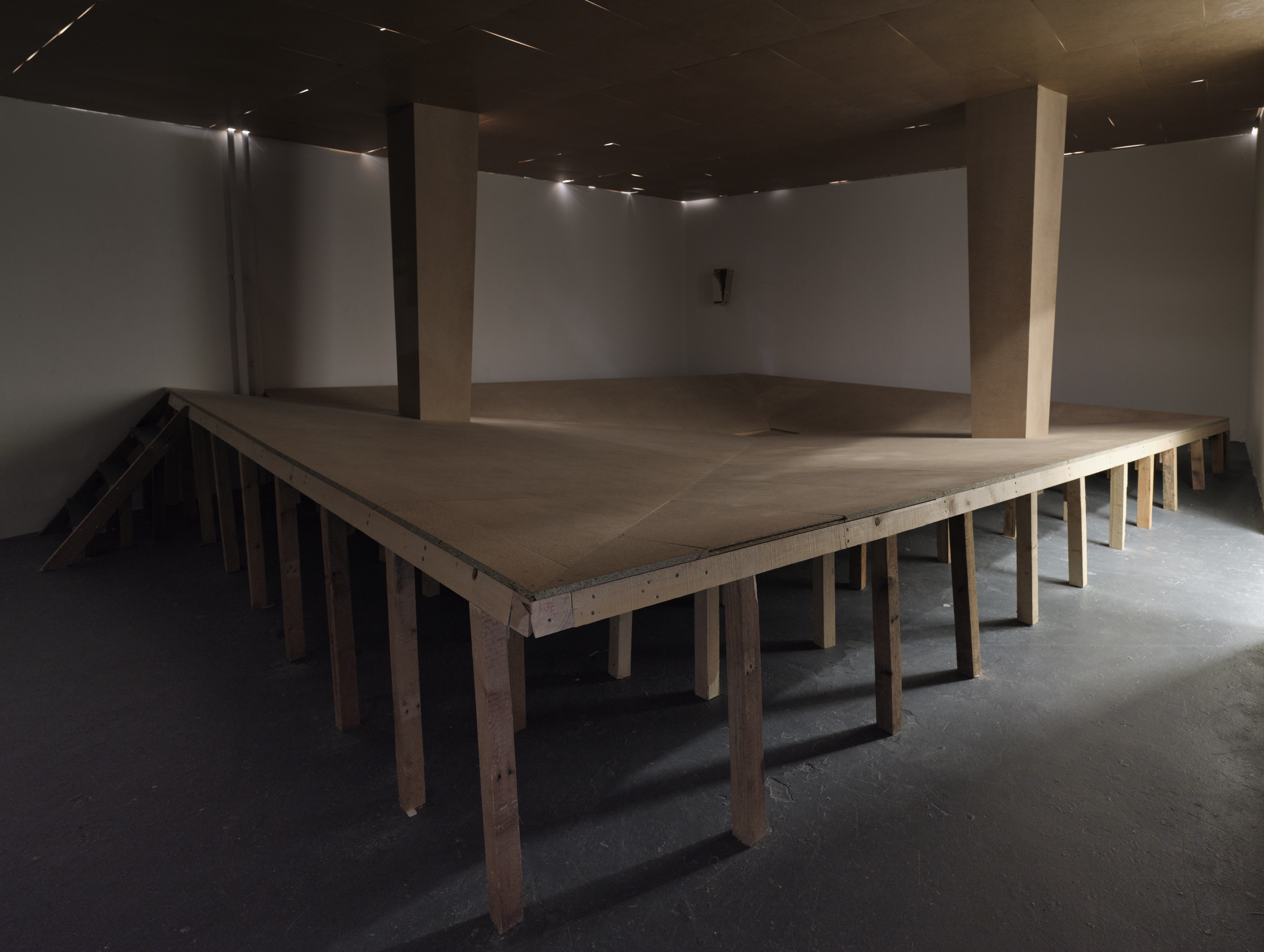
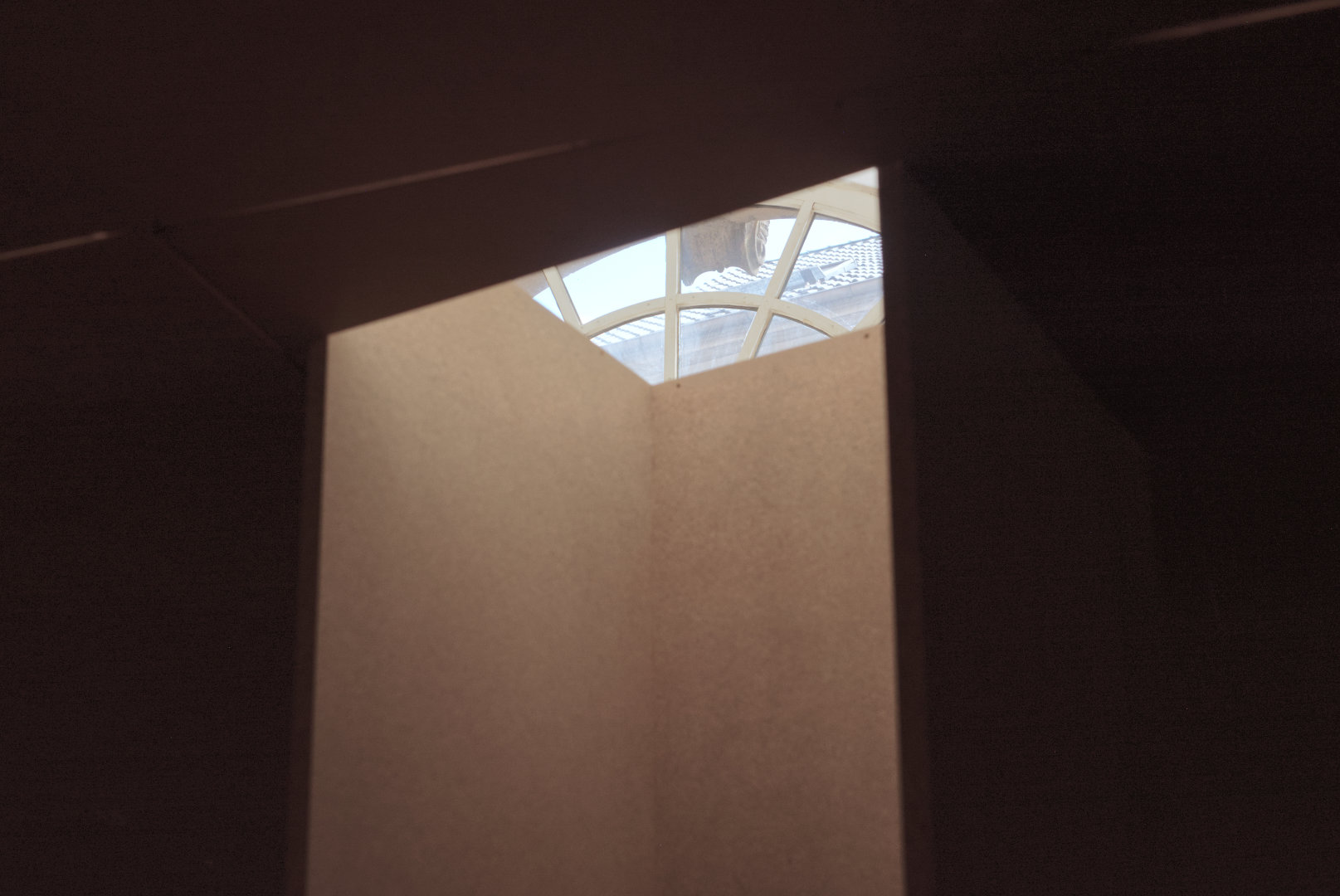
Drawing on the past division of the space, a recessed ceiling in the main part of the studio divides the room into a conscious, visible lower section and an unconscious section above, where daylight is concentrated and channelled through various slits and two square, conical columns into the area below. The studio space, which is otherwise designed for maximum visibility, is transformed into a confined, contemplative and niche-like place. The floor of the room is occupied by a raised platform constructed from chipboard. This basin is itself sloped and, at its highest point (90 cm), accessible to visitors via a wooden staircase.
Standing on it, one can partially glimpse the original, high-ceilinged and light-filled studio space through the openings in the columns, gaining an understanding of the relationships within the original spatial volume. At the same time, the play of light and shadow provides insights into the space outside the building. The floor architecture challenges the conventional uses of an exhibition space and offers new possibilities for positioning and spatial perception. The sloping, pyramid-shaped platform restricts movement and access to the space whilst simultaneously creating new lines of sight. It invites visitors to carefully find a vantage point, to control their own steps, and to perceive the various movements within the interior and exterior spaces. This installation also serves as a sensory stage for how work and thought have unfolded over the years in this sheltered place: following a view outwards, gathering thoughts and fragments of potential works, weighing them up, until ultimately an action, a first step, emerges.
july 2025, class Prof.in Nina Canell, photos: Kai Werner Schmidt